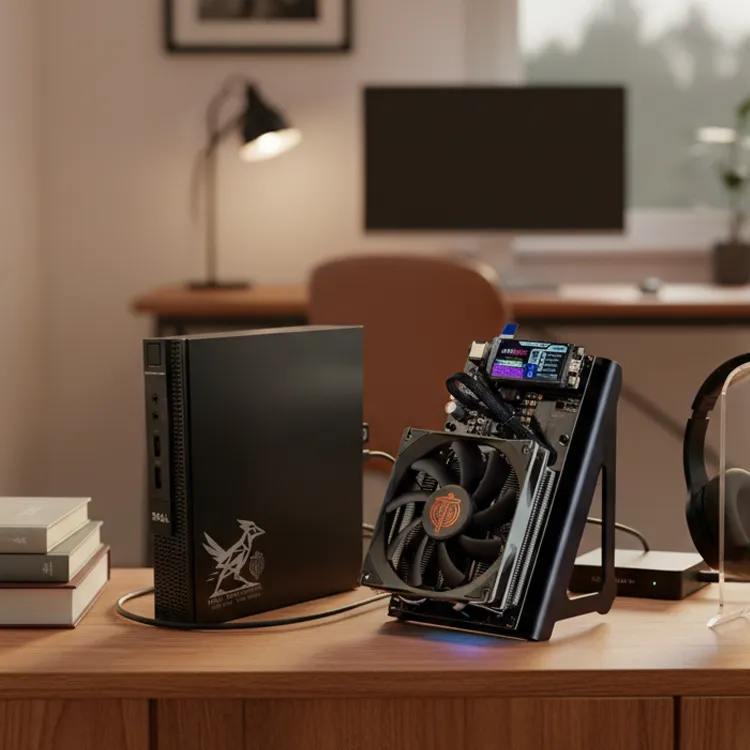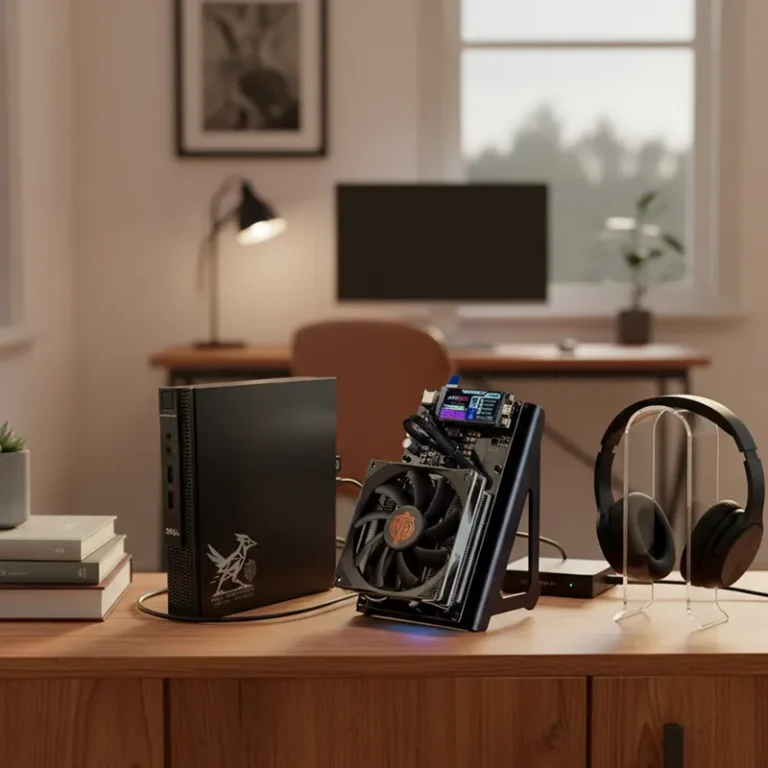

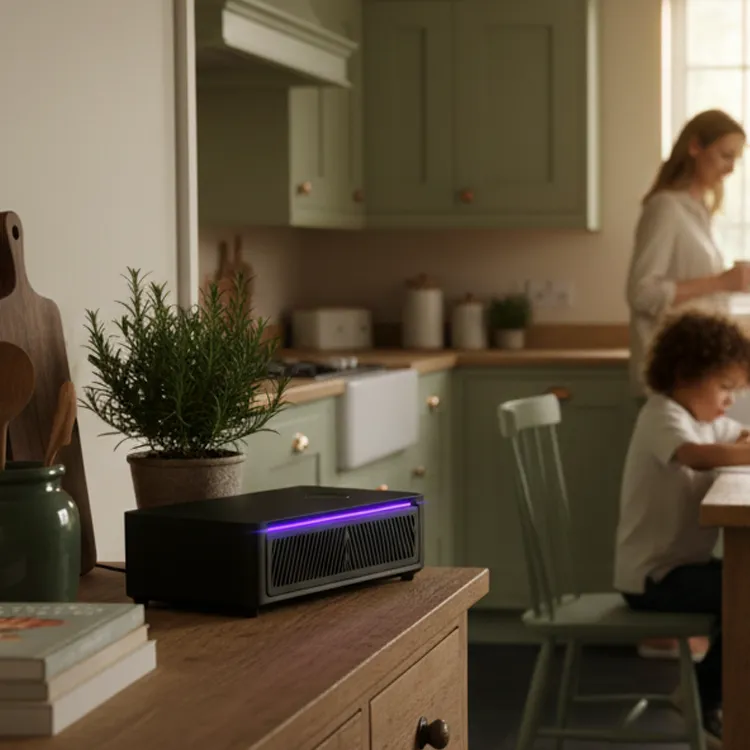
A huge amount of time, design effort, and real innovation has gone into making modern home miners simple to set up, quiet enough for everyday spaces, and beautiful enough to belong on a desk, shelf, or sideboard. If you’ve got power, internet, and a bit of curiosity, you can participate — no warehouse, no engineering degree, no “crypto bro” setup required.
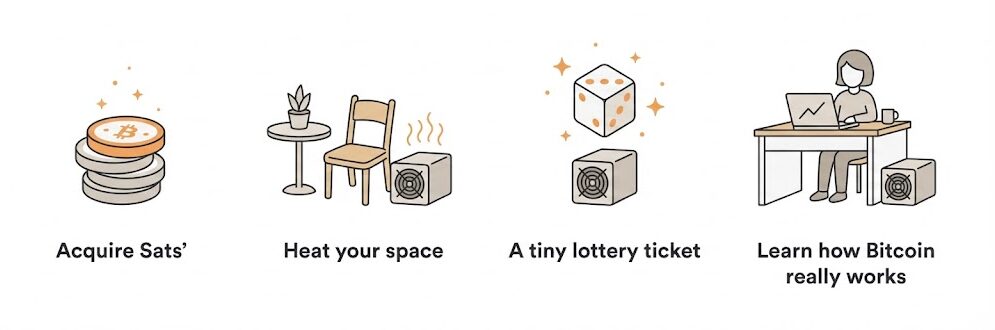
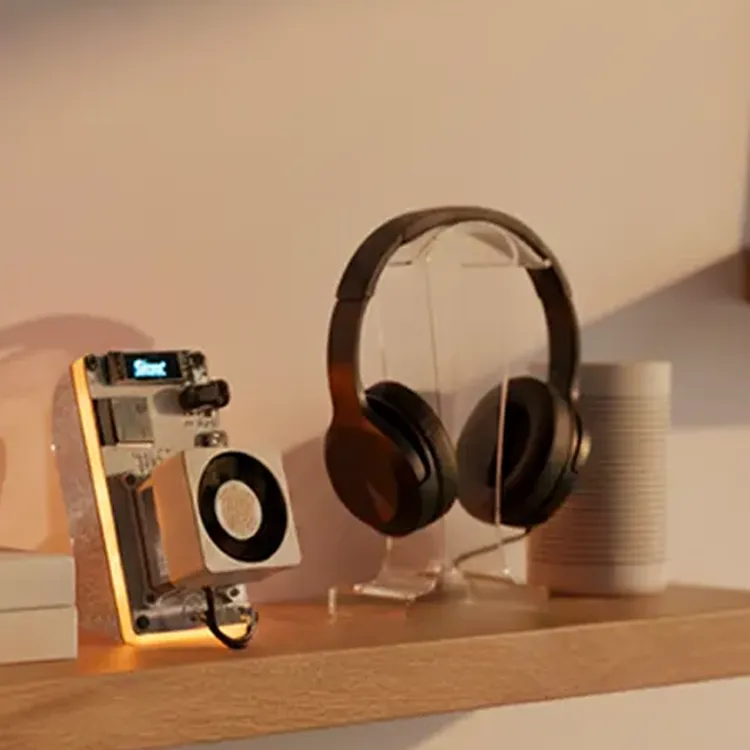
Whether you want a tiny desk miner (like 'Mein Coffee' as shown) or mining heater that earns its keep, or a full self-hosted solo setup, home mining is now genuinely accessible — and it’s one of the most direct ways to support Bitcoin’s decentralisation from your own home.

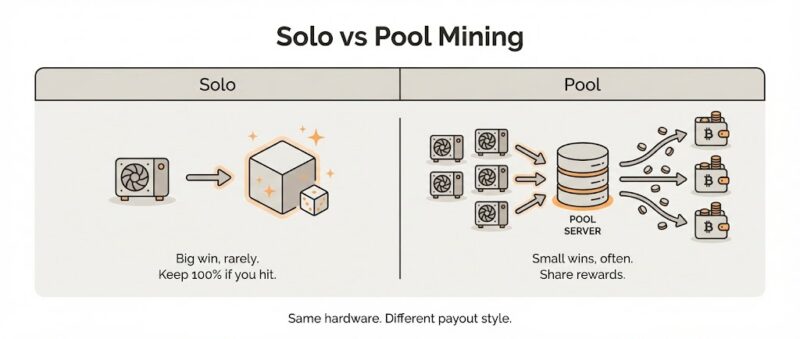
If you want the simplest “I want to see it working and earn something” path, pick pool mining. It’s more predictable and reassuring. You will see a few sats' (fraction of a Bitcoin) trickle in daily.
Choose solo mining if you understand it’s a long-odds lottery ticket and you’re doing it for the thrill, the learning, or to support decentralisation—knowing you might earn nothing for a long time. If you hit a block, you will earn a nice reward; (currently 3.125 BTC)!
A Bitcoin ASIC miner
A power socket (and ideally a safe, quality power supply/adapter)
An internet connection (Ethernet preferred, Wi-Fi is usually fine)
A Bitcoin wallet address (this is where payouts go—think “bank account number”, not a password)
A phone or computer to access the miner’s simple web interface
That’s it. You don’t need a powerful PC—setup is normally done in a few minutes from your phone or laptop using a web page.
Yes—switching is easy. It’s usually just changing the “pool address” (server) in the miner’s settings and saving. You don’t damage anything and you can swap back any time. The only thing to remember is: pool payouts are tracked by the pool, so if you leave a pool you’ll only receive whatever you’ve already earned there (some pools have a minimum payout threshold). With solo mining, there’s no “balance building up”—you either find a block or you don’t.
Your miner connects to a Stratum server—that’s simply the pool/solo service’s address and port, which they publish on their “Getting Started” page. You copy the Stratum host and port into your miner’s settings and you’re connected.
For solo mining: a great option is my friend’s solo-focused service, SoloHash (www.solohash.co.uk). It’s built specifically for solo-style mining—use the Stratum host + port they provide and you’re off.
For regular small payouts (pool mining): Ocean (ocean.xyz) and Braiins Pool (braiins.com) are solid choices if you want steadier, smaller payments over time.
For maximum self-sovereignty (recommended): you can run your own Bitcoin node and point your miner at your own solo Stratum server. It’s not required to start mining, but it’s one of the best upgrades you can make: you verify Bitcoin for yourself, reduce reliance on third parties, and keep your mining as independent and private as possible. If you want to go down that path, see our Node Runners.
In all cases, you’re simply copying the Stratum host and port from the service’s setup page into your miner’s settings.
Use this realtime calculator to see what you can earn from pool or solo mining.
Our ethos is simple: help you start mining with confidence and take a real step toward self-sovereignty.
The Solo Mining Co’ is run by Duncan (I Am GPIO) — a long-time designer in the Bitcoin mining space, building and refining home miners since 2011.
Custom work: https://www.thesolomining.co/iamgpio/
Trustpilot: https://uk.trustpilot.com/review/thesolomining.co
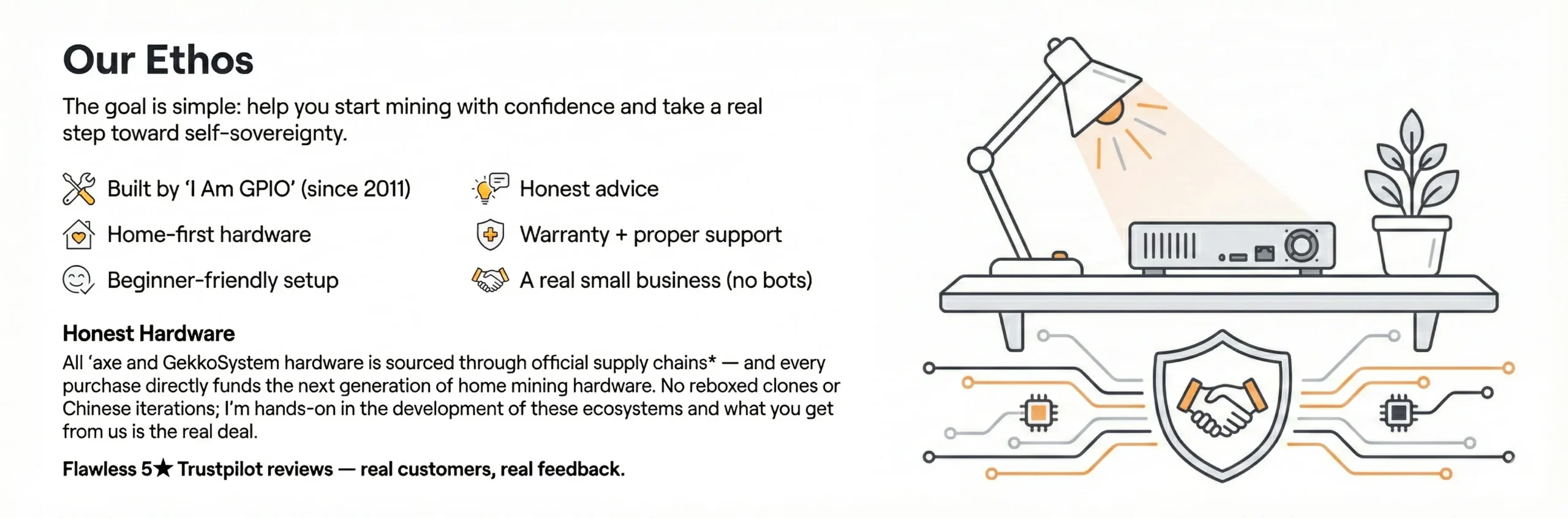
*All ‘axe’ hardware (Bitaxe, NerdAxe, etc.) we sell is sourced directly from OSMU (Open Source Miners United) contributing members — the people who actively develop, manufacture, and fund the current and next generation of open-source home-mining hardware, of which I am a contributing member. Buying OSMU-stamped hardware means the design aligns with the freely published open-source files and is produced under fair working practices. [1]
All GekkoScience hardware we sell ships directly from GekkoScience in the USA and is made by them, in the USA. [2]
Check out our FAQ — it’s packed with answers to the most common questions about home Bitcoin mining.
Prefer to chat? WhatsApp us (+447305 074199) with any questions and we’ll help you get pointed in the right direction.